
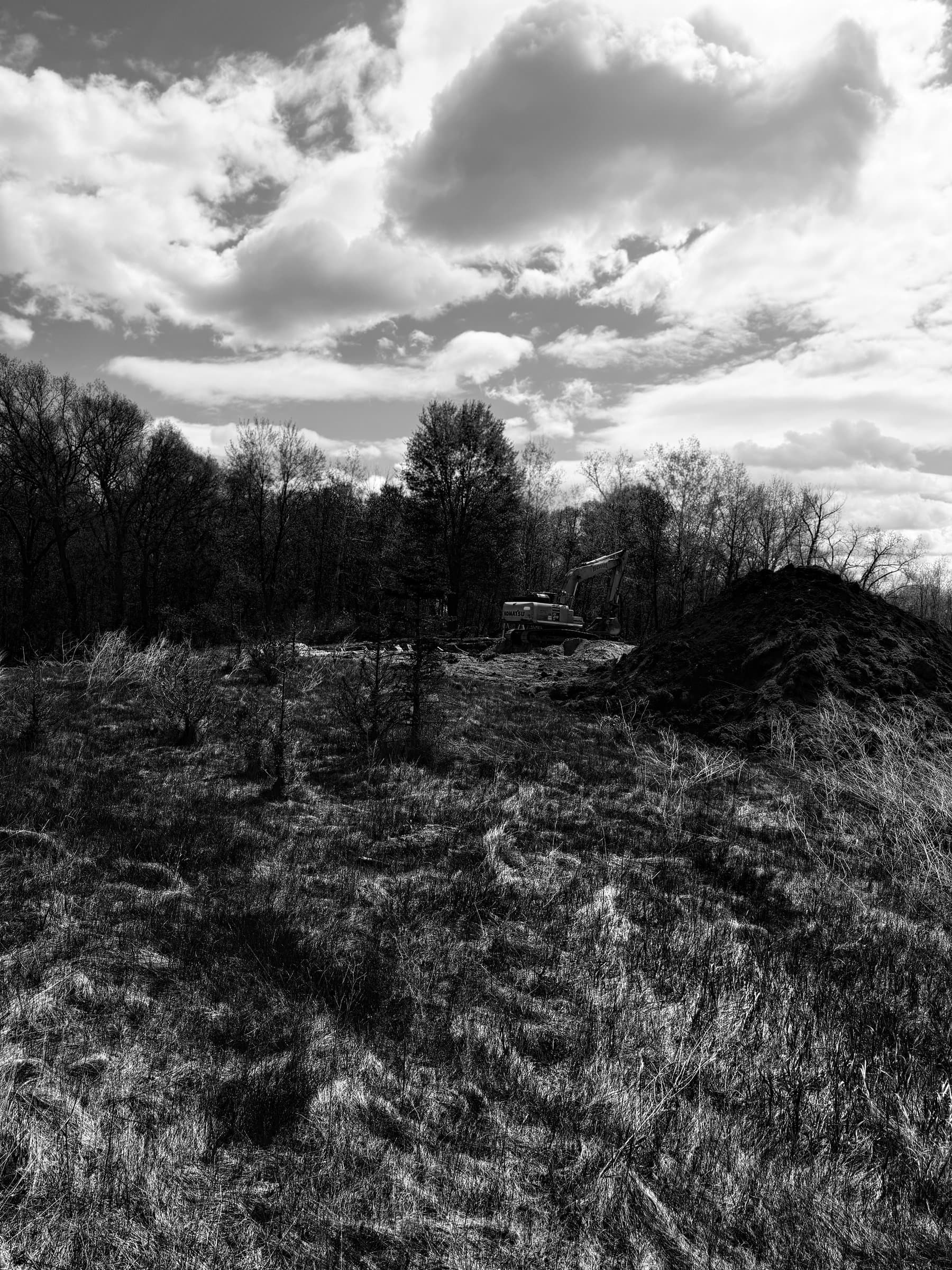
Custom homes for Afton landowners.
Built on the lot you already own in Afton, near the village or up on the bluffs above the St. Croix.
A river town that hasn't grown up too fast.
Afton holds onto things most river towns let go of. The bluffs, the wooded acreage, the sense that you can drive into town and run into someone you know without it being engineered that way. Wealth is here but it isn't loud. The houses are set back behind the trees, and the people who live in them seem to want it that way.
Heritage's first build is on five wooded acres just south of the village. A single-level home for the kind of family that finds Afton and stays. We know the lot character here, the bluff orientation, and the kind of home that fits Afton without trying too hard.
Five steps from the lot you own to the home you'll live in.
The first three months are evaluation and design, where most of what makes the home worth building gets decided. The build itself runs roughly ten to twelve months on top of that.
- 01
Lot evaluation
2-3 weeks
We walk the lot together. The slope, the trees, the views, the way the light moves across it through the day. We look for what the home wants to be on this piece of ground, before any drawing starts.
- 02
Soil, perc, setback
3-4 weeks
Soil borings, percolation testing if you're on a private septic system, survey work to confirm setbacks, easements, and the buildable envelope. The findings shape the design and the budget before either gets locked.
- 03
Design for the lot
6-8 weeks
Floor plan, exterior, and site plan develop together. Design follows the land, not the other way around. You see drawings every week and weigh in before anything is finalized.
- 04
Permitting
4-8 weeks (varies)
City plan review, building permits, septic and well permits where applicable. The timeline depends on which jurisdiction you're in and how busy their queue is. Heritage handles the paperwork end to end.
- 05
Build
10-12 months
Excavation, foundation, framing, mechanicals, interior, finish. Weekly site visits, weekly written updates. One person who has been on every part of the build from groundwork through handoff.
The honest answers to the lot-specific questions that come up first.
What if my lot needs septic and well?
Most rural lots in the eastern Twin Cities do. We coordinate the well driller and the septic designer in the early phases, fold their requirements into the site plan, and price both into the build before you sign anything. Existing wells get evaluated before we plan around them.
What about the bluffs and the setback rules?
Afton's bluff and shoreline rules are real, and they shape what a lot will hold. Survey work confirms the buildable envelope before design goes deep. Where the rules constrain the home you had in mind, we know early enough to redesign around them or to tell you honestly that the lot may not fit. The bluff orientation is also where the best views come from, so the design usually finds a way to work with it rather than around it.
What about easements and setbacks?
Survey work in week three or four tells us the buildable envelope before design goes deep. If an easement or setback constrains the home you had in mind, we know early enough to redesign or to tell you honestly that the lot may not fit the home you want.
What if the lot has an HOA or design review?
Some neighborhoods do. We pull the covenants and the architectural review process during evaluation, design within them, and submit on your behalf. Where the review board has revision history, we read it so the first submission isn't a learning exercise.
What about an existing structure that needs to come down?
If there's a tear-down, we price demolition into the build and time it so you're not paying carrying costs on a vacant lot. If a foundation or driveway is salvageable, we look at whether reusing it actually saves money before assuming it does.
Construction-to-permanent financing, with the lot already in your name.
Build-on-your-lot financing usually means a construction-to-permanent loan: one closing, one set of fees, and the loan converts to a standard mortgage when the home is finished. The construction phase is interest-only on the drawn balance, which keeps the carry manageable while the build is in progress.
If the lot is paid off, its value can typically be applied as part of your down payment on the new build. That changes the math meaningfully, and it's the first thing a lender who works in this space will ask about. If the lot still has a loan against it, that gets folded into the construction loan rather than carried separately.
We'll connect you with lenders who specialize in build-on-your-lot. They handle this every week, not once a year, and they understand draw schedules, appraisals on unbuilt homes, and how lot equity factors in. The first call is informational, not a commitment.
The first Heritage build, week by week.
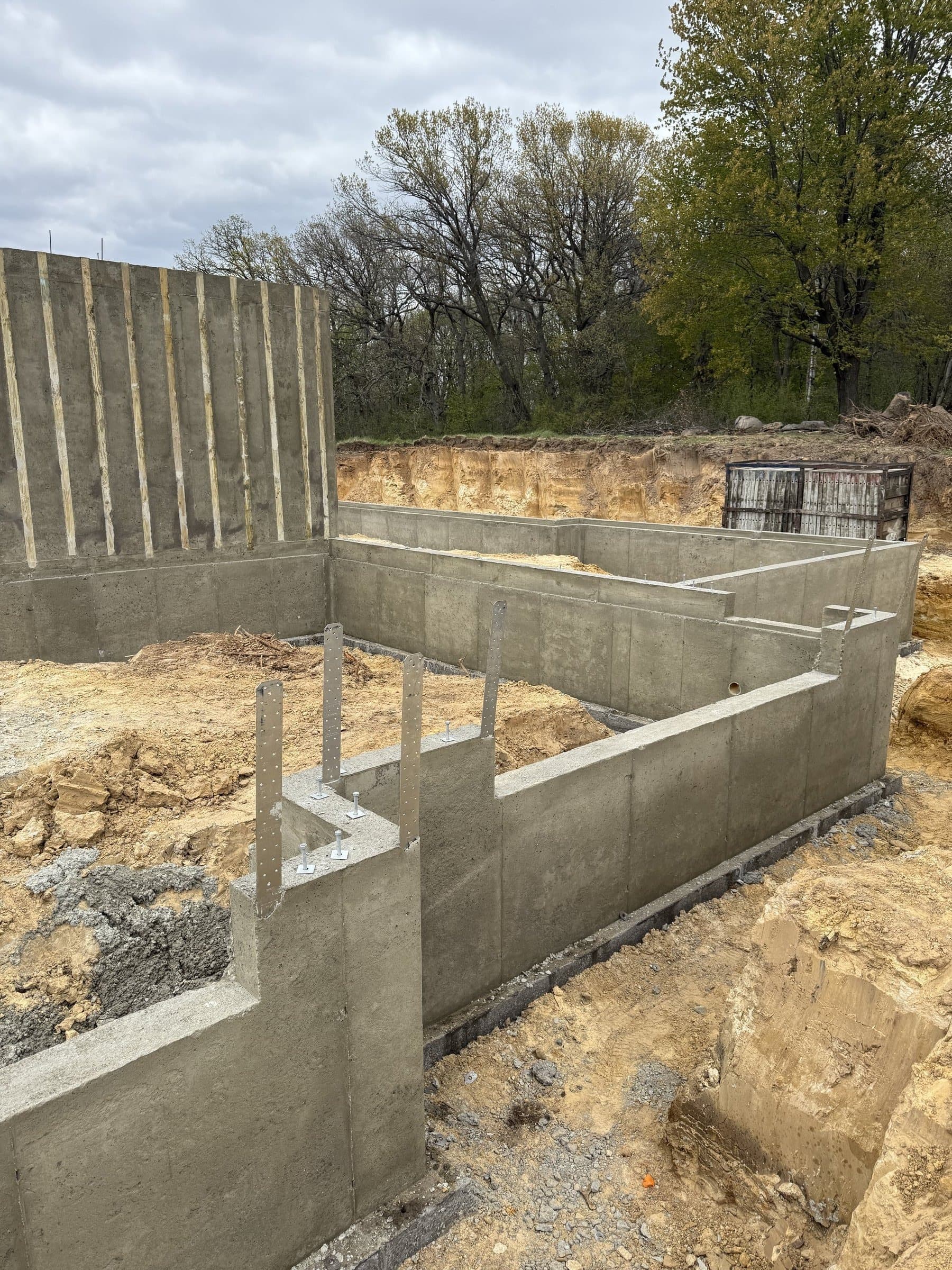
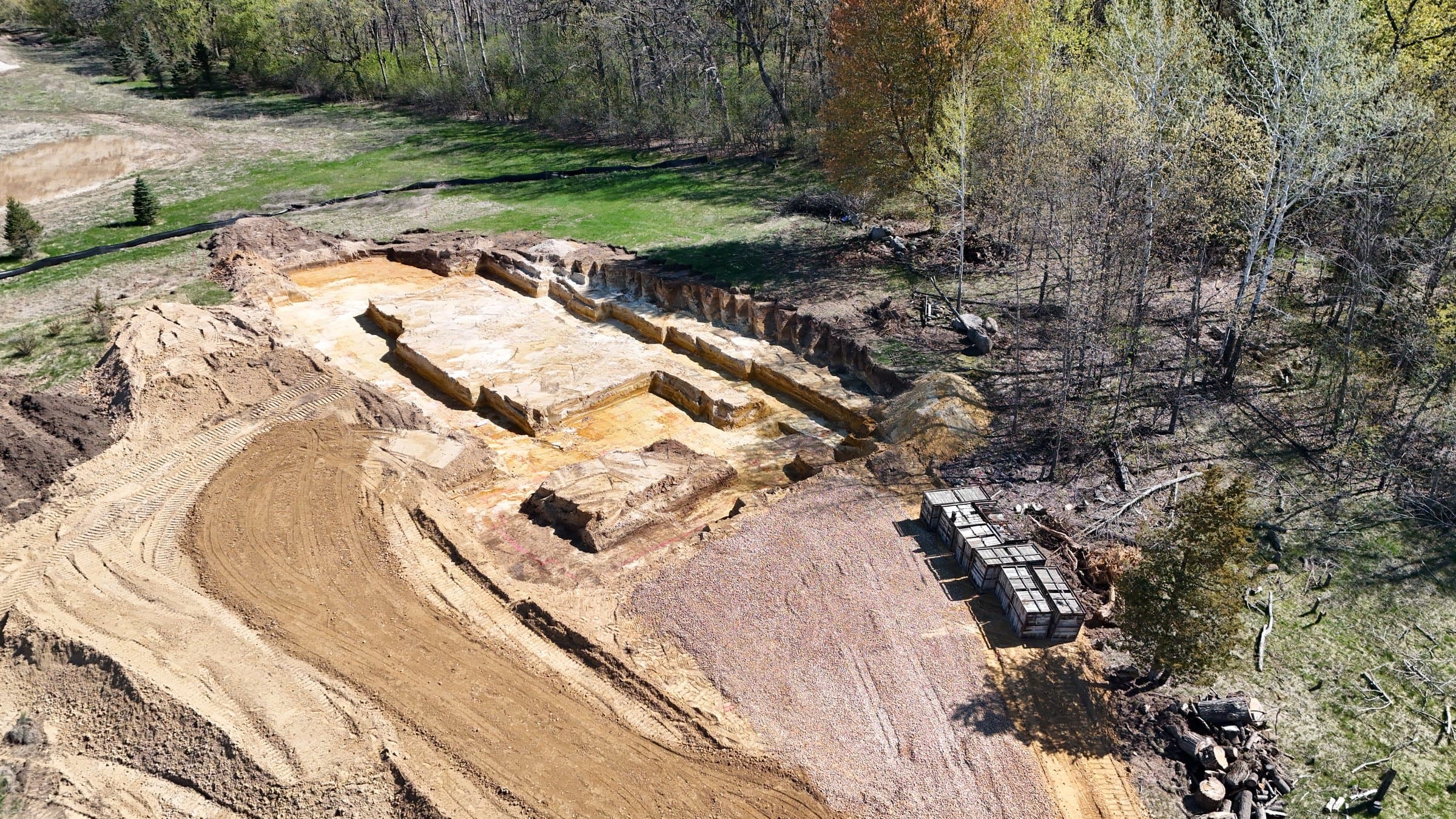
Five wooded acres in Afton, a single-level home, slab-on-grade with a safe room. The journal is the proof a home is actually being built, not the proof a builder has a portfolio.
The foundation is finished.
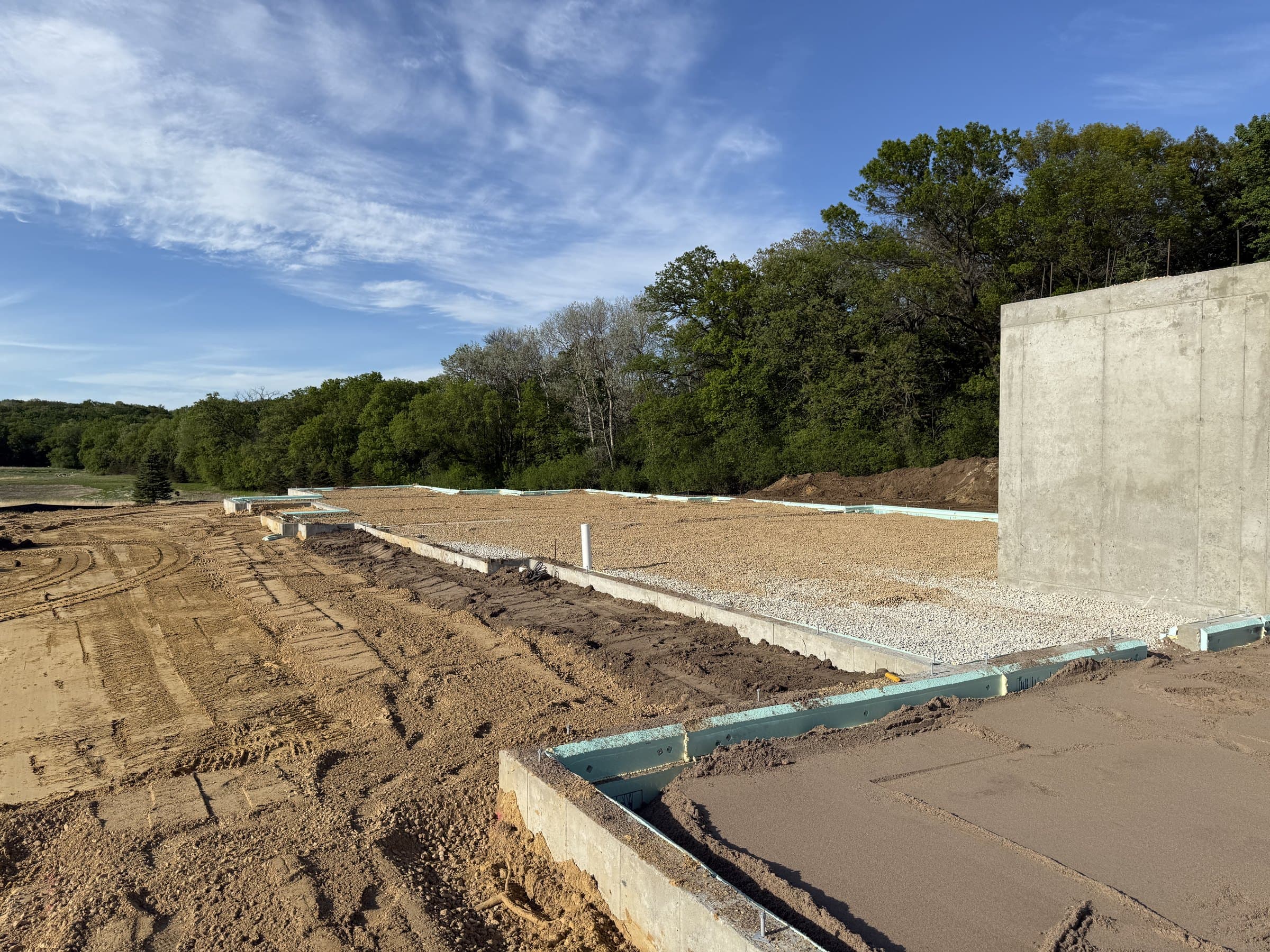
Week 6. The foundation is done, and the dirt has been pushed back up around it. Inside the walls the ground is filled in and flat. For a few days you could walk the whole thing, room to room, before it gets closed up. Woods close on every side. The floor goes in next.
Tell us about the lot and the home you're picturing.
The first call is a conversation, not a quote. We listen, ask questions, and let you set the pace. Or call (651) 383-1710.