
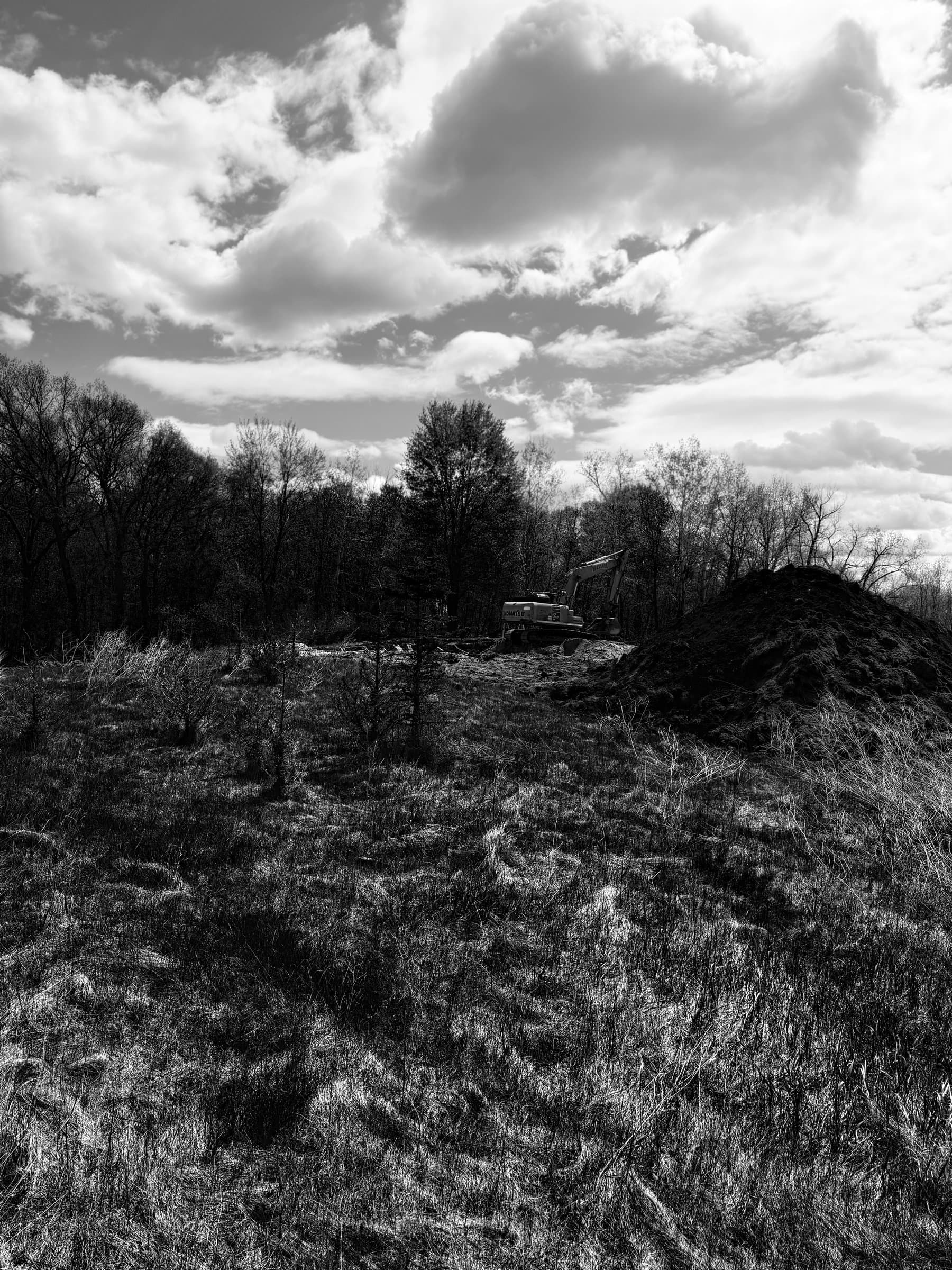
You've already decided which way the porch should face.
In Denmark Township it might face the St. Croix bluffs, or rolling farmland with wooded ravines running through it. Our part is finding out what your land allows before you set your heart on one spot.
Life here
Denmark Township has some of the oldest history in the state. Point Douglas, where the St. Croix meets the Mississippi, had its first settlers in 1838, and in 1841 it got the state's first post office outside Fort Snelling. It was a steamboat and ferry stop to Hastings and Prescott, and by about 1900 it had faded to a ghost town. The Whitaker farm, which dates to 1846, is described as the oldest family farm in Minnesota.
The township still farms. More than 2,000 acres are enrolled in agricultural preserves, and the Met Council plans Denmark as a mix of farms, hobby farms and homes on very large lots. Orchards and berry farms are part of the township's character too. St. Croix Bluffs Regional Park sits on the river here, with about 3,800 feet of shoreline, a swimming beach and ski trails in winter.
Denmark has no post office, so most homes use a Hastings address, and some use Afton. Hastings Public Schools serves Denmark. The parcel decides the district, so we confirm it on the county property record before you buy. Our first home, Oakridge, is in Afton, just to the north.
What we check on a Denmark Township lot
If the river is what drew you here, the river rules are where we start. Denmark runs its own zoning, and near the two rivers the overlay rules replace it. Washington County handles septic. These are the checks that decide what a Denmark lot can hold, and we confirm each one with the township for your parcel.
Which rules apply to your land
Away from the rivers, Denmark's districts set the lot size. Rural Residential lots start at five acres, Single Family Estate lots at three, and agricultural land at 20 or 40. Every lot needs one buildable acre, which leaves out slopes over 25 percent, wetlands, floodplain, easements and poor soils. The house sits 40 feet from the front lot line, 20 from the sides and 50 from the rear. Inside the river overlays, those tables stop applying and the river rules take over.
The St. Croix bluffline
Inside the Lower St. Croix riverway, the house sits 200 feet back from the river and 100 feet back from the bluffline. The bluffline here is where a slope that can be seen from the river drops below 12 percent, and a licensed surveyor certifies it. A lot can have more than one, and each carries its own setback. Nothing can be built or graded on slopes steeper than 12 percent, and hard surface is capped at 20 percent of the lot.
Colors you can see from the river
If the house can be seen from the St. Croix, the siding and the roof have to be brown, green or tan earth tones that blend with the trees around them. Cutting trees near the water, near the bluffline or on steep slopes takes a permit, though clearing for the house, the septic and the driveway is allowed if the tree canopy still holds when seen from the river. We choose the exterior with those rules in hand, and you still make the calls.
The Mississippi side
Toward Point Douglas and Hastings, the Mississippi River Corridor Critical Area applies instead. In its rural and open space district, the house sits 200 feet from the Mississippi and 100 feet from the bluffline. In the river neighborhood district, those numbers are 100 and 40. Height there is measured on the side of the house that faces the river.
Height to the top of the roof
Denmark caps height at 35 feet, measured from the lowest grade at the house to the highest point of the roof on the street side. A two-story walkout with a steep roof can go over that, so we check it while the design is still easy to change.
Room for two septic areas
Denmark has no public sewer. Washington County requires room for two soil treatment areas on every lot, and full soil testing before a permit, even if the lot was tested when it was created. A large footprint with a pool and a long driveway can use up the space for the second area, so we lay out the septic and the house together.
Site work waits for the permit
Denmark doesn't allow grading, driveway work, footings or tree removal before the building permit is issued. On a county road, the county's access permit comes first. A driveway longer than 125 feet or any work on a slope over 12 percent also falls under the South Washington Watershed District's erosion rules. On a town road, nothing in the right-of-way can stand more than a foot above the drive, which rules out tall entry pillars at the road.
If you're still looking for land here
Much of Denmark is still farmland, and the rules change sharply near the rivers. Lori runs Royal Home Team, and she and her team help people find acreage in the township. If you're looking near the river, she'll ask early how much the view matters to you, because that decides which rules you'll live under.
If you need to sell first
If you need to sell your current home before you build, Royal Home Team can handle that sale. We'll work out with you where you'll live while the house goes up.
Questions about building in Denmark Township
How big can the garage be?
Since February 2026, an attached garage in Denmark can't be larger than half of the home's finished square footage. If the house has no attached garage, the township allows an extra detached garage of up to 864 square feet. Other outbuildings follow a separate limit based on lot size.
Can we build the barn before the house?
Only on a farm of 40 acres or more. Otherwise accessory buildings wait for the house, and a detached building can't sit closer to the road than the house without Town Board approval.
Should we test the well for PFAS?
Yes. The state's 2024 sampling found most of Denmark, aside from the southeast area, largely unaffected, but many wells here haven't been tested with the newer lab method. The township posts the state's free sampling offer. We test the new well as soon as it's drilled.
Can the house sit closer to the bluff?
Sometimes, by variance. In the rural St. Croix district, the bluffline setback can be reduced to as little as 40 feet. The conditions include leaving drainage undisturbed, keeping trees over six inches, replanting within 180 days, and a house that's hard to see from the river in summer. We tell you early whether a variance makes sense on your lot.
Can I split off part of my land?
Density is counted per 40 acres, and agricultural land allows one home per 20 acres. Splitting off less than a whole tax parcel needs approval from the township attorney first. A 2026 change helps some parcels in undersized survey sections, so we check yours.
Tell us about the land you have in mind in Denmark.
Send the address or a pin on a map. Lori or Dustin will call you back, usually with a few questions about the river side.