
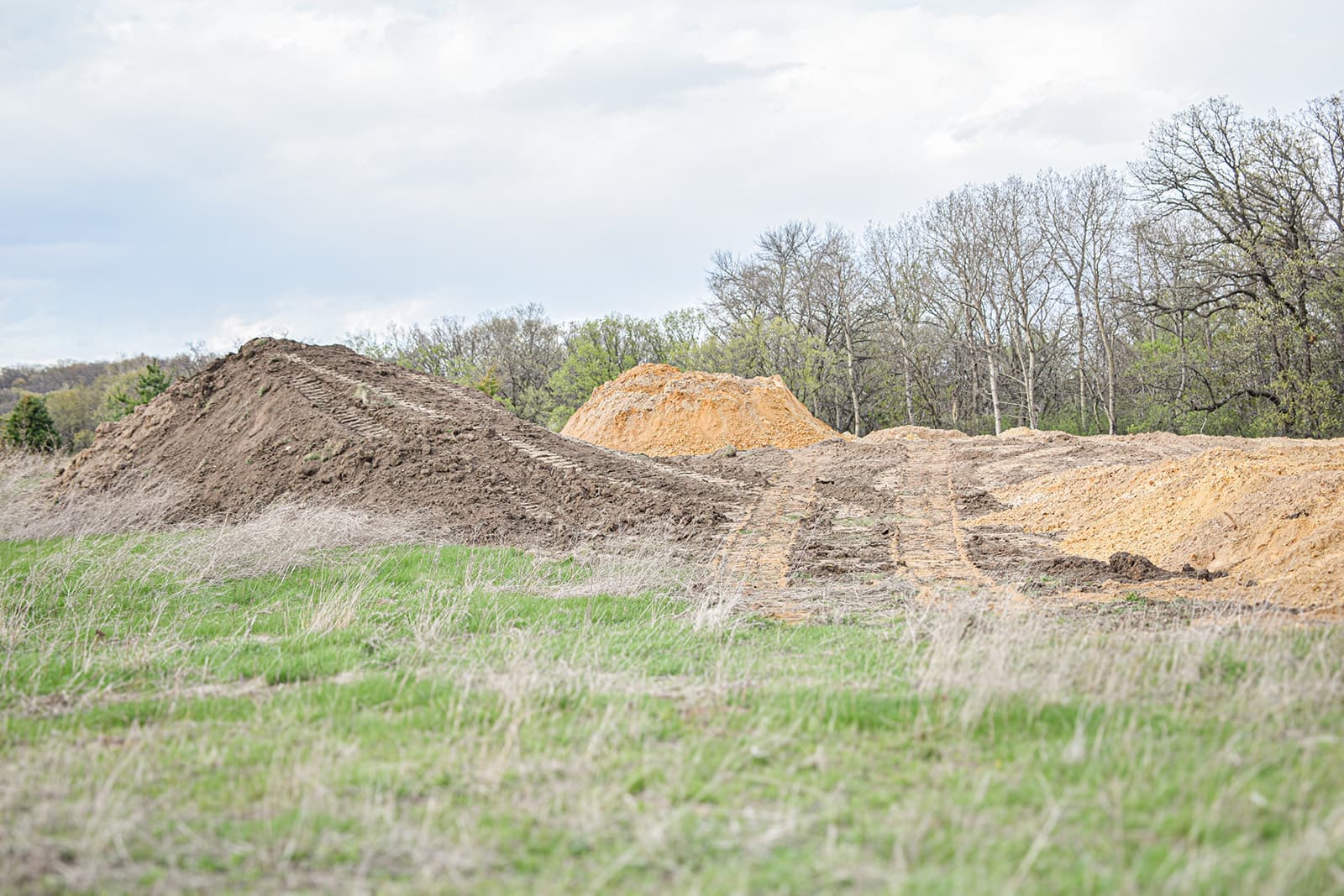
Why it comes first
On a lot with city sewer, the house goes where the setbacks allow. On a lot with septic, the soil gets a say too. The septic system needs soil that absorbs water at a steady rate, and the house, the driveway and the well have to fit around it.
That's why we do the soil testing before design gets far. A design drawn before the testing can end up in the wrong spot on the lot.
What the soil tests are
A septic system in Minnesota is designed by a state-certified designer. The designer starts with the soil. Borings or dug pits show the soil layers, and a percolation test or a soil description shows how fast water moves through them. The designer is looking for how deep the usable soil goes before it hits rock, heavy clay or a seasonal water table.
In Washington County, a lot needs at least four soil observations before the county issues a septic permit.
Room for two septic areas
Washington County requires enough suitable soil on an existing lot for two septic areas: the one you build, and a backup in case the first one fails someday. Some cities add their own rules. Afton, for example, won't issue a building permit unless the lot can hold two complete drainfields, and it requires suitable soil for at least one acre of septic area per home.
The backup area has to be kept free of buildings and heavy traffic. On a smaller lot, that second area is often what limits where the house can go.
When the soil isn't great
Not every lot has deep, well-drained soil. If the usable soil is shallow or the water table is high, the designer may call for a mound system, which is built up above the natural ground. Mounds work, but they cost more and take up more of the yard.
If a lot can't support a standard system, ask the city what it allows before you go further. Some cities won't approve a new home without one.
Testing in winter
Soil can't be evaluated while the ground is frozen. If you find a lot in January, the testing may have to wait until spring. That's workable, as long as the purchase agreement gives you the time and makes the purchase depend on the results.
The well
A new well is drilled by a licensed well contractor. In Washington County, the contractor files the notice with the Minnesota Department of Health before drilling, and the state fee for a new water-supply well is $325. The well has to keep minimum distances from the septic system, and some neighborhoods set their own. Lake Elmo's open-space neighborhoods, for example, require at least 50 feet.
If the lot already has a well, have it tested and inspected before you plan around it. A well that won't be used has to be sealed by a licensed contractor or kept under a permit from the state.
What it costs, and when you know
Washington County charges $237 plus $102 per lot to review the soil and site work, and $868 for a single-family septic installation permit in 2026. Those fees are small next to the system itself, which depends on the soil and the design.
We price the well and septic during the lot evaluation, from the designer's plan. That way the number is in the budget before you sign anything, and before the lender sees it.
When you sell a home with septic
Washington County requires a septic compliance inspection before a home sells, unless the system is less than five years old. A certificate of compliance is good for three years. Minnesota also requires the seller to disclose every well on the property in writing before the purchase agreement is signed.
If you're selling your current home to build, get the inspection done before you list, so the buyer isn't waiting on it.
Questions to ask before you buy land
These are the questions we ask on every rural lot. Ask them before you make an offer, or have us ask them with you.
- Is the lot on city sewer and water, or will it need a well and septic?
- Has anyone done soil borings or a perc test on this lot, and can I see the results?
- Is there room for two septic areas, and where are they?
- Is there an existing well, and when was it last tested?
- Can the soil be tested before the purchase closes, given the season?
- What does the city require beyond the county's rules?
Before you buy land or start a design
We look at the soil, the well and the septic before anything gets drawn, and we tell you plainly if a lot won't work for the house you want. Lori asks a lot of questions on the first call. You don't need a lot or a plan yet.
Related pages
- Custom homes on your lot in Afton →
- Custom homes on your lot in Lake Elmo →
- Find your land in Afton →
- Find your land in Lake Elmo →
More guides