
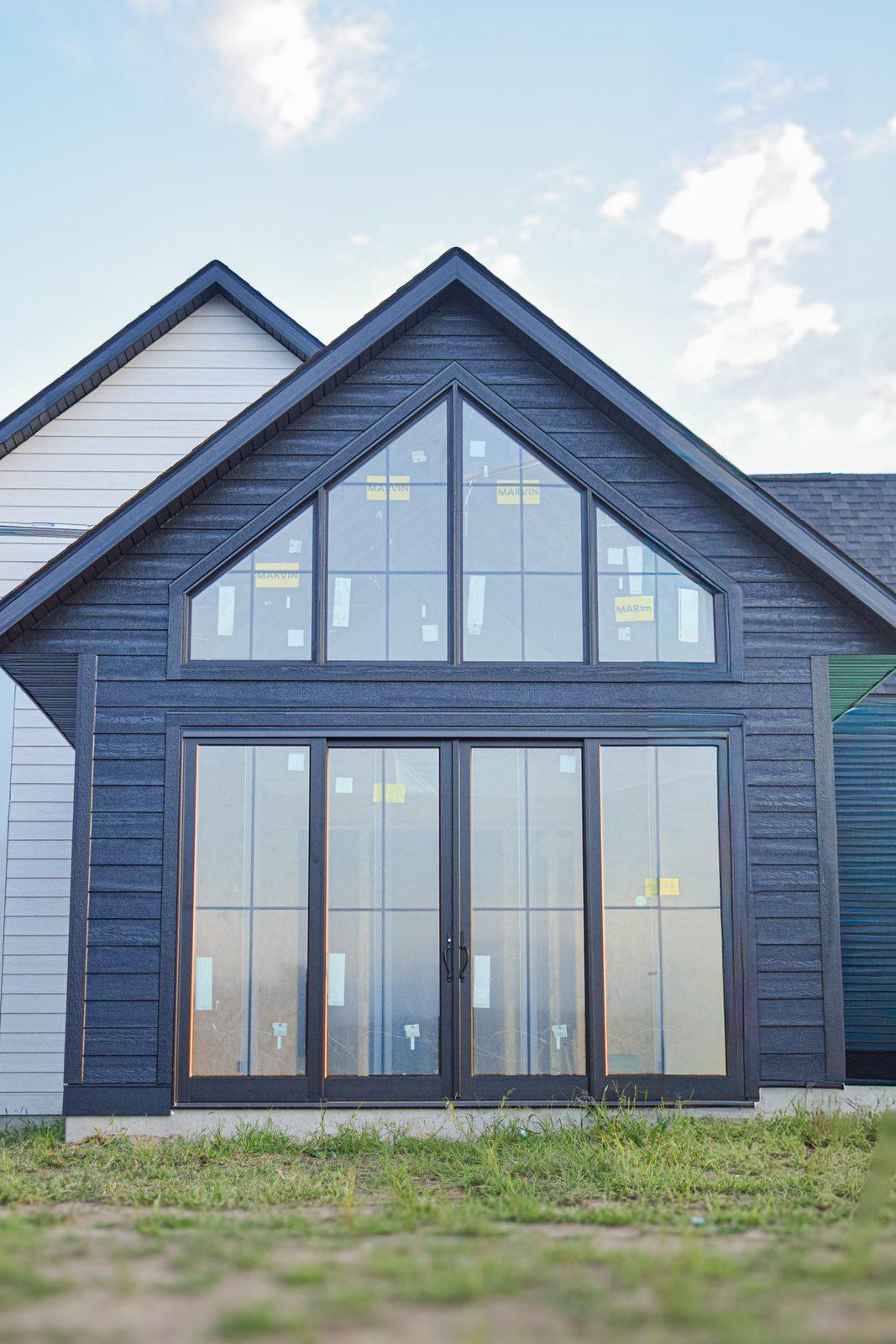
Start with what the lot can hold
Every lot has a buildable area. It is the part of the land left after setbacks from the property lines, easements for utilities or access, and any slopes, wetlands, or shoreland the rules protect. A current survey shows most of it. The buildable area decides how large the home can be and where it can sit.
The land itself matters as much as the lines. Slope can become a walkout lower level or a drainage problem. Mature trees may be worth designing around. The way the sun crosses the lot through the day shapes where the main rooms should face. These are easier to see on foot than on paper, which is why a lot walk comes before design.
Well and septic
Many lots in the eastern Twin Cities are outside city sewer and water and rely on a private well and a septic system. In Minnesota, a septic system is designed by a state-certified designer and permitted by the city or county. The design starts with soil borings and a percolation test, which show how well the soil absorbs water.
The results affect more than the septic system. They decide where the system can go, which in turn affects where the house can go. Wells are drilled by a licensed well contractor and must keep required distances from the septic system. If the lot already has a well, it should be tested and inspected before anyone plans around it.
Local rules that come with the location
Each city and township sets its own zoning rules, including setbacks, height limits, and how much of the lot can be covered. Many neighborhoods add covenants and an architectural review board. Read those documents early, because they can rule out a design before you get attached to it.
Some locations carry extra rules. Lots along the St. Croix fall under riverway and bluff rules that limit how close a home can sit to the bluff and how tall it can be. Lots inside Stillwater's historic district go through design review before a permit is issued.
Costs that live in the ground
The price of a house plan does not include getting the lot ready for it. On land you already own, these site costs are where budgets most often go wrong, so price them before the design is final:
- A driveway and access, especially on long or sloped lots
- Electric service, and gas or propane, brought to the house site
- A well and septic system, where there is no city sewer and water
- Grading, drainage, and any soil corrections
- Tree removal and clearing
- Demolition, if an existing structure has to come down
A builder who evaluates the lot first can give real numbers for these instead of a general allowance.
Paying for it
Most lot owners use a construction-to-permanent loan. There is one closing, and the loan becomes a standard mortgage when the home is finished. During construction, you pay interest only on the amount drawn so far.
If the lot is paid off, its value can usually count toward the down payment. If there is still a loan on the lot, it is typically folded into the construction loan. A lender who handles construction loans regularly will understand draw schedules and how a home that is not built yet gets appraised.
How long it takes
With Heritage, the steps before construction usually take a few months: about 2 to 3 weeks to evaluate the lot, 3 to 4 weeks for soil testing and survey work, 6 to 8 weeks for design, and 4 to 8 weeks for permits, depending on the city. The build itself runs about 10 to 12 months.
Heritage's first home, Oakridge in Afton, is documented stage by stage in the build journal, from groundbreaking in April 2026 to drywall in September.
Questions to ask a builder about your lot
- Will you walk the lot with me before any design starts?
- What will the soil tests, survey, and septic design tell us, and when?
- Which site costs are priced in, and which are allowances?
- Who handles permits, covenants, and design review?
- Who will I talk to each week during the build?
Start with a conversation about your lot.
Heritage builds custom homes for lot owners across the Twin Cities metro. Tell us where your land is and what you're picturing, and we'll start there.
Related pages
- Custom homes on your lot in Afton →
- Custom homes on your lot in Woodbury →
- Custom homes on your lot in Lake Elmo →
- Custom homes on your lot in Stillwater →
More guides