
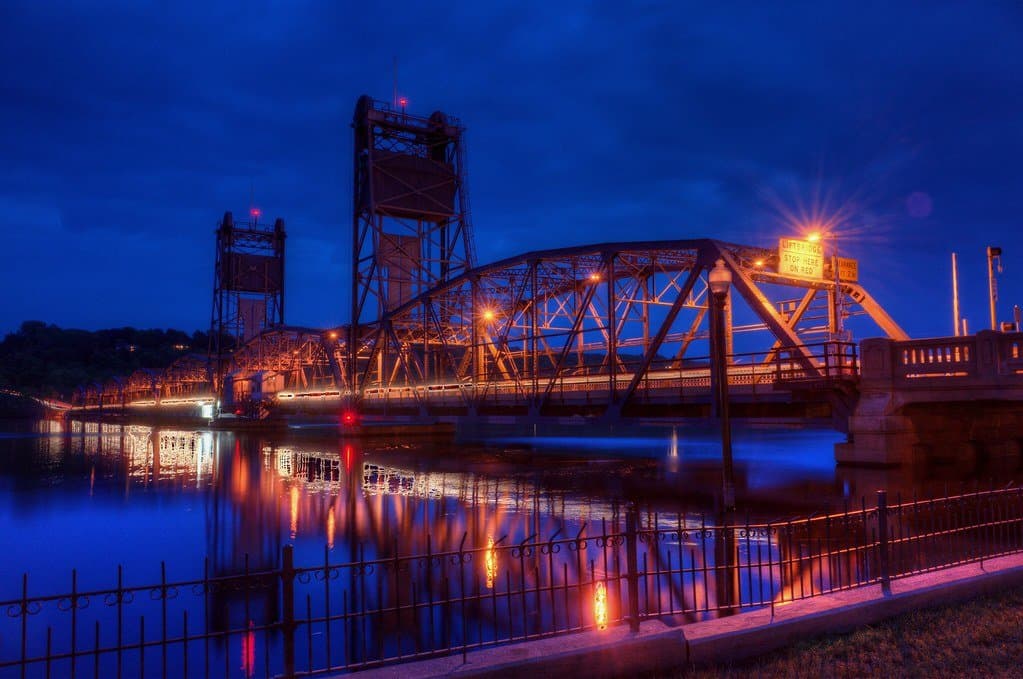
Find your lot in Stillwater.
Bluff parcels above the river or in the historic neighborhoods west of Main. Royal Home Team finds it. Heritage builds on it.
Historic blocks and bluff parcels, both with their own rules.
Stillwater is what people picture when they picture Minnesota at its slowest. The river runs along Main Street, the brick storefronts haven't changed in fifty years, and the houses on the bluff have been quietly worth a lot of money for a long time.
Buildable lots in Stillwater split between the historic district downtown and the bluff neighborhoods west of Main. Historic lots come with design review; the design conversation starts with the local guidelines rather than a blank sheet.
Bluff lots have their own market and their own rules. Setback distances from the bluff line, view easements, and existing infrastructure all shape what the home can be. Lori knows which parcels carry which constraints.
Not every lot is buildable. Not every buildable lot fits the home you want.
Acreage and orientation
How much land, where the trees sit, where the home would face. The right lot already has a home wanting to be built on it. The wrong lot makes you fight the geometry.
Soil and slope
Soil composition decides foundation work. Slope decides whether you walk out or you don't. We assess both before recommending a lot, not after you've already bought it.
Well and septic feasibility
Most rural lots in the eastern Twin Cities are on private well and septic. Some lots will hold both cleanly. Some won't. The percolation test result and the well-yield estimate happen before the offer when we can.
Setbacks, easements, and the buildable envelope
Survey work reveals what the lot actually allows. Bluff rules in Afton, lot-line setbacks in Stillwater's historic blocks, easement strips that constrain where the foundation can sit. The envelope decides the home as much as the home decides the envelope.
HOA and design review character
Some neighborhoods have substantive review boards. Some have a covenant the closing attorney filed and nobody enforces. We read the difference before the offer.
Views, light, and what the lot wants
The best lots already know what they want to be. We look for the angle the morning light comes from, the view that the house should open toward, and the part of the lot the house should sit on. None of that changes the price; all of it changes the home.
Historic district design review
If your lot sits inside Stillwater's historic district, the design has to clear the local heritage preservation review. The proportion, the materials, and the street-facing elevation are usually where the review focuses. We design within the guidelines from the first sketch rather than as a permitting concession.
Royal Home Team finds the lot. Heritage evaluates whether it builds.
Lori Howard runs Royal Home Team alongside Heritage. Twenty-eight years selling residential real estate in the eastern Twin Cities. She knows which lots are about to come available, which neighborhoods are quietly shifting, and which builders' projects you'd want to live next to.
Royal Home Team finds the lot. Heritage evaluates whether it builds. Same operating team across both expertises. Most builders pass clients to outside real estate agents and hope the lot they bring back is buildable. We don't.
We walk land together before either side is committed to it. If the lot fits, Heritage takes the build. If it doesn't, Lori finds another. There's no pressure to commit before the right lot shows up.
Brick warmth and river light, on a buildable lot.
Stillwater lots are for families who want the historic setting without inheriting the compromises of an older home. The neighborhoods are walkable, the river light is what it is, and the homes that sit here hold value better than most of the metro.
Heritage builds in Stillwater with the warmth and proportion the neighborhood expects. New construction that reads at home next to a hundred-year-old neighbor.
Lot purchase and construction loan, sequenced together.
When the lot purchase and the build happen together, the financing usually combines them. A lot loan funds the purchase. A construction-to-permanent loan covers the build and converts to a mortgage at handoff. Some lenders roll the lot purchase directly into the construction loan, so there's one closing instead of two.
Paying cash for the lot changes the math. The cash position becomes the down-payment equity on the construction loan, and the build finances cleanly from day one without carrying two loans during construction.
We connect you with lenders who handle the lot-plus-build sequence as a regular line of work, not as an exception. The first call is informational, not a commitment.
The lot we found, the home we're building.
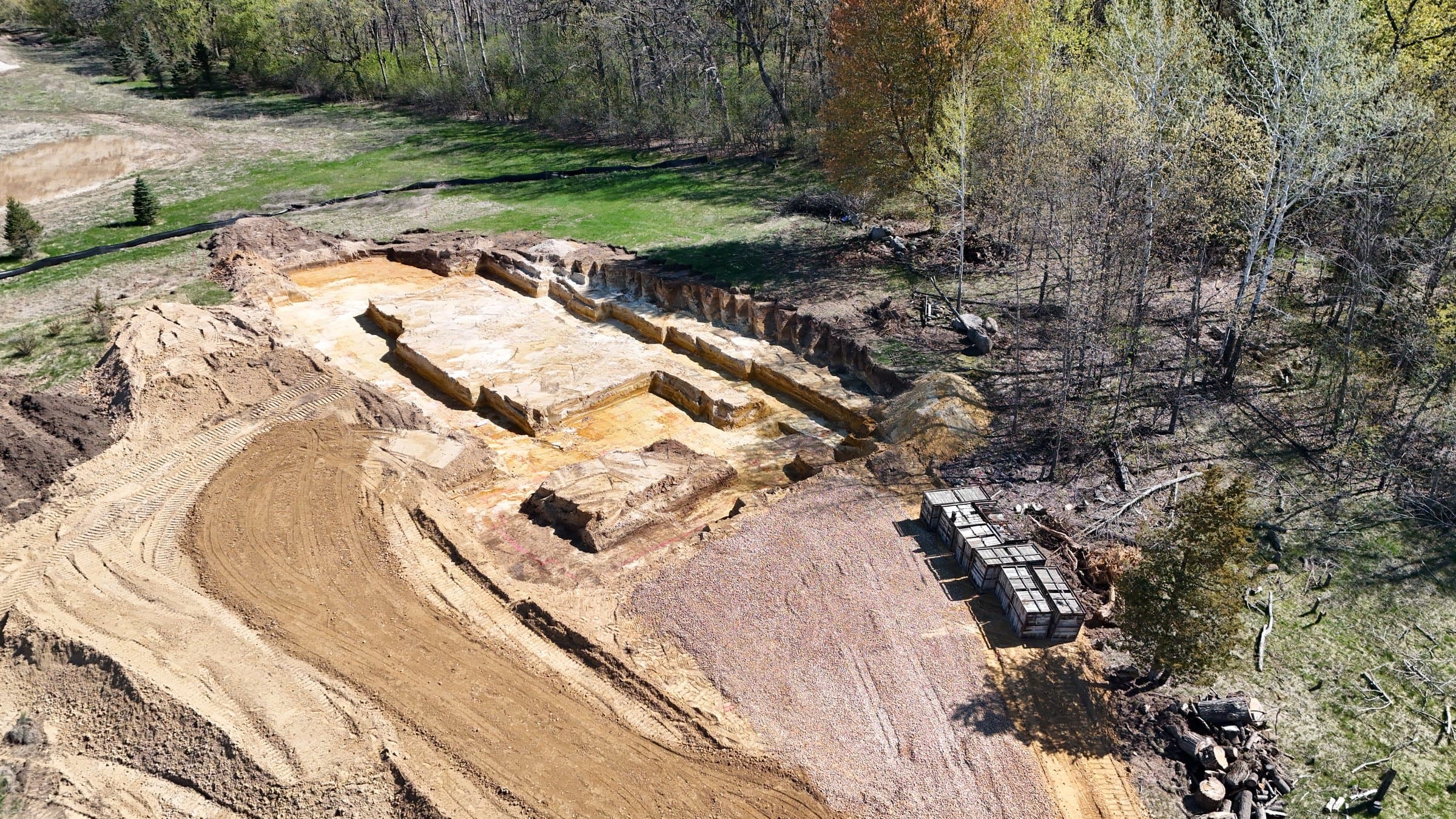
Five wooded acres in Afton. The lot fit the build. The build is shaped to the lot. Both sides handled by the same team.
The foundation is finished.
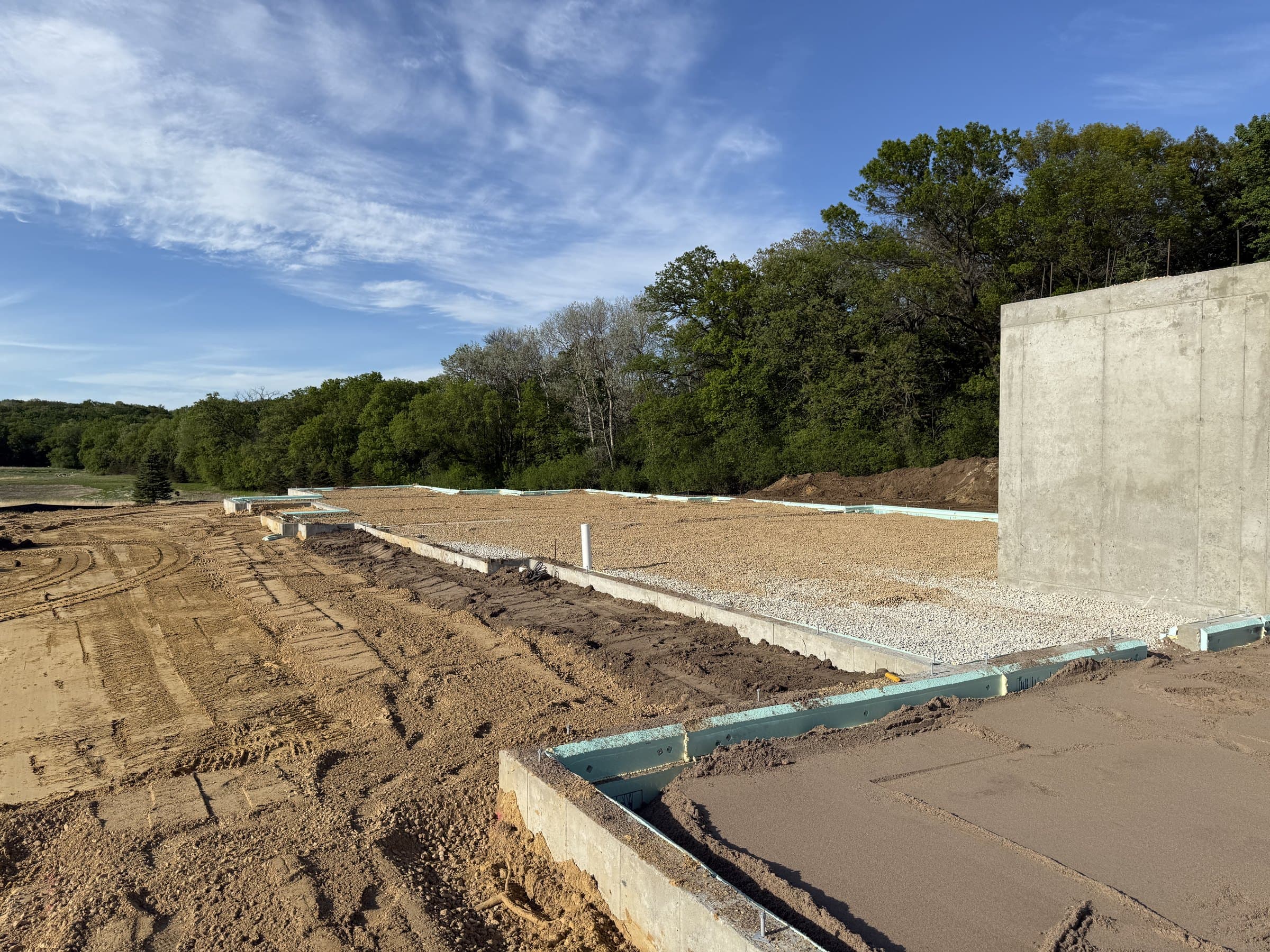
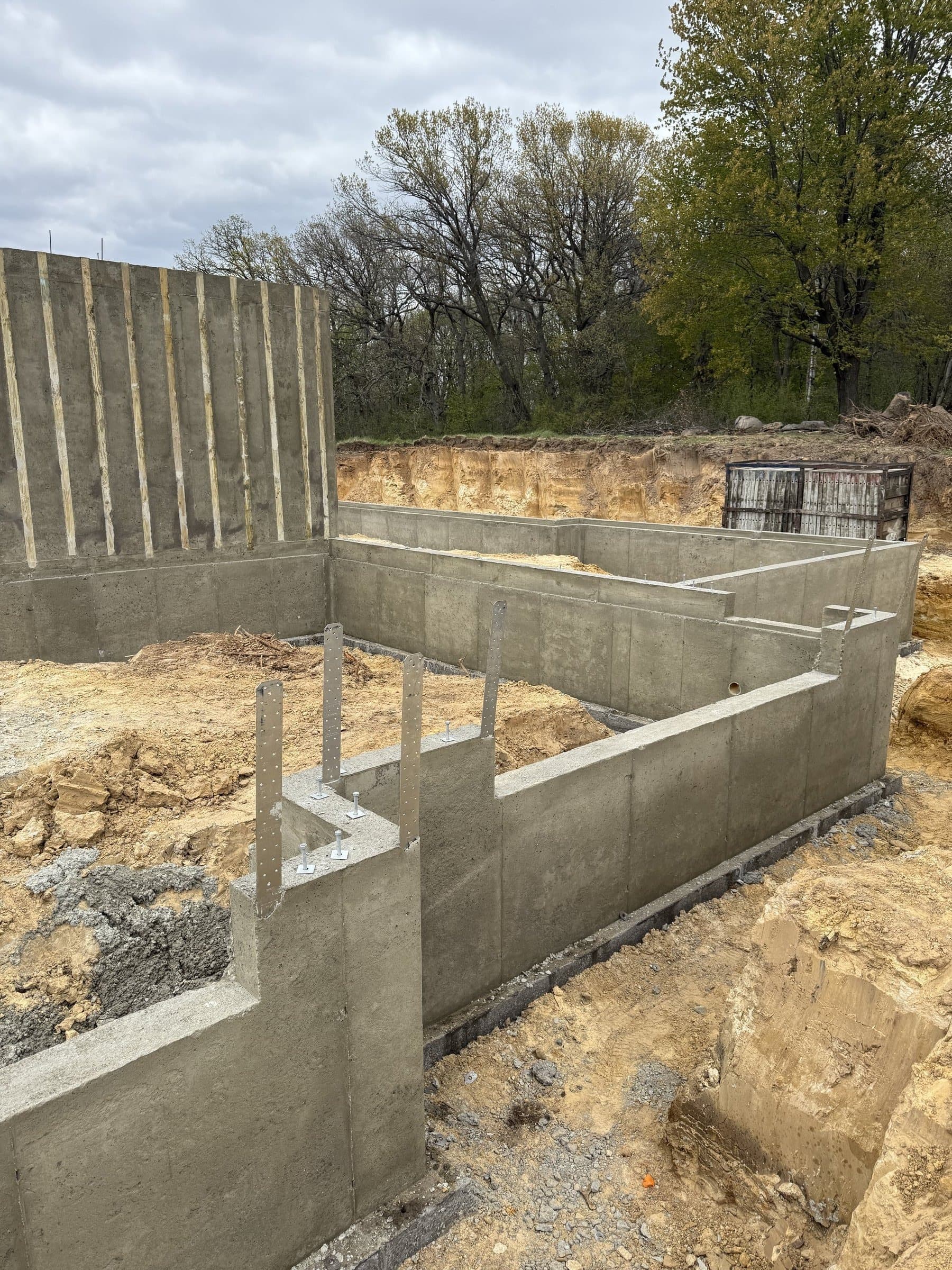
Week 6. The foundation is done, and the dirt has been pushed back up around it. Inside the walls the ground is filled in and flat. For a few days you could walk the whole thing, room to room, before it gets closed up. Woods close on every side. The floor goes in next.
Tell us about the home you're picturing.
We'll start by listening. Where you're picturing, what you've already seen, what you haven't been able to find. Or call (651) 383-1710.