
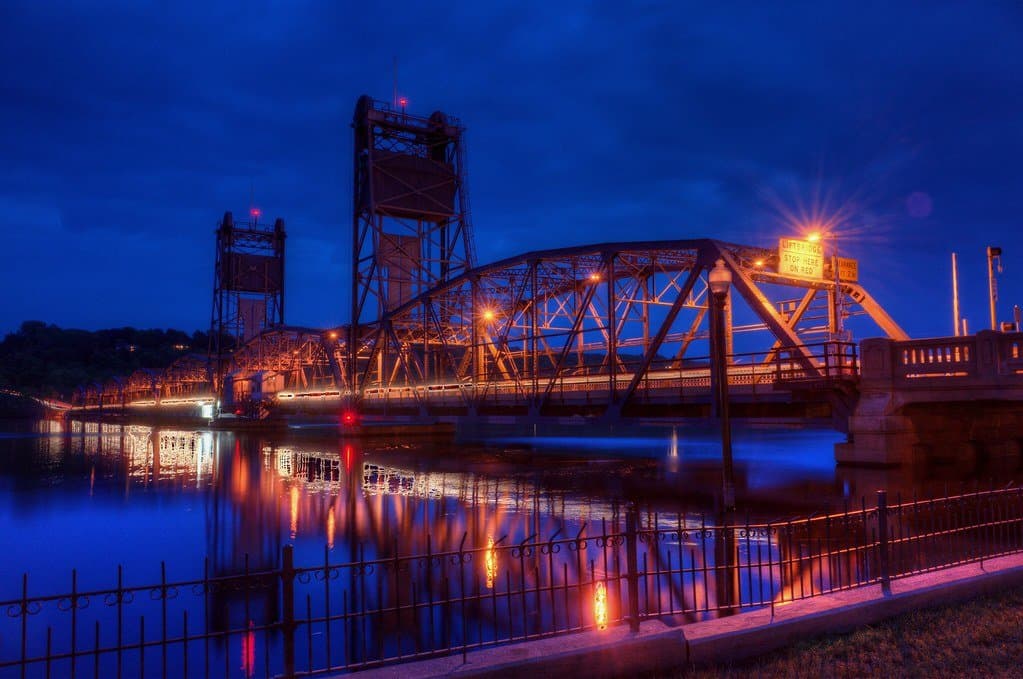
Sell in Stillwater, build the next one.
Heritage Homes builds the new home. Royal Home Team lists and sells the existing one. Same team across both ends in Stillwater.
Historic homes hold value. Bluff homes hold more.
Stillwater is what people picture when they picture Minnesota at its slowest. The river runs along Main Street, the brick storefronts haven't changed in fifty years, and the houses on the bluff have been quietly worth a lot of money for a long time.
Stillwater homes hold value better than most of the eastern Twin Cities. Historic homes especially: their pricing is often as much about story as square footage. Bluff homes carry their own market, with a buyer pool that doesn't shop the rest of the metro.
Lori prices Stillwater listings against comparable historic or bluff stock, not the broader Woodbury-Cottage Grove average. The gap between the two methodologies is usually meaningful.
Two transactions on the same calendar.
Most families need the equity from their current home to fund the next one. The hard part is rarely the price either side will land at. It's the sequencing. Sell too early and you're renting. Sell too late and you've carried a build longer than you wanted to.
Doing this alone usually means three different teams: a builder for the new home, a real-estate agent for the sale, a lender bridging the gap. Three calendars, three sets of priorities, and the spaces between them are where deals slow down.
The choice in front of most sell-then-build clients isn't whether the move is hard. It's whether it's coordinated.
Heritage Homes and Royal Home Team, the same hands.
Heritage builds the new home. Royal Home Team lists and sells the existing one. Lori Howard runs both, with twenty-eight years in residential real estate and new construction behind her.
Same conversation, same timeline, same person at the center of both ends. The build clock and the sale clock get coordinated from the first call rather than after the design is locked.
The integration is the value. Heritage doesn't claim to do the real estate transaction. Royal Home Team handles that side end to end, and the build side answers to the same calendar.
Three honest scenarios. We tell you which one fits before you choose.
- 01
Sell first, then build
Maximum equity certainty. Requires interim housing.
Lori lists the existing home before the build breaks ground. The proceeds become the down payment on the construction loan, and there's no carrying cost on the old home during the build. The trade-off is a stretch of interim housing while the new one rises. For families with flexibility on where to land for ten months, this is usually the cleanest path.
- 02
Parallel paths
Sale and build run together. Requires coordination and contingent offers.
The build starts before the sale closes. The existing home goes on the market timed to the construction schedule, often with a contingent offer that lets the buyer wait on the new home's completion date. This works when the local market is moving and when both sides accept the contingency. Most coordination conversations happen here.
- 03
Bridge financing
Build first, sell later. Requires bridge loan or HELOC.
The new home gets financed without waiting for the existing home to sell. A bridge loan or a HELOC against the existing home covers the gap, and the sale happens after move-in. Higher carrying cost during the overlap, but no pressure to time anything. The right path when the existing home is hard to vacate or when a slower sale gets a better price.
- 04
Stillwater historic-district timing
If your existing home is historic, account for inspection complexity.
Historic Stillwater homes often have older mechanical systems, foundations, or framing that buyers want carefully inspected. Listings price in that complexity, and we plan for an extended due-diligence window before clear-to-close. The build calendar is set to absorb that timing rather than fight it.
Bridge loans, contingent offers, and a build loan that converts at handoff.
The dual-transaction sequence has more moving parts than a standard build. Bridge loans, contingent offers, equity from the sale applied to the construction down payment, and the construction-to-permanent loan that converts the build into a mortgage at handoff. Most lenders see one of these monthly. The ones we work with see all of them every week.
We coordinate the timing. Lori prices the listing against where the buyer market sits and against where the build calendar lands. The lender lines up the bridge or the contingent offer to match. The sale closes when it should, not when it has to.
The first call sketches the path. We tell you honestly which of the three scenarios fits your situation, and we connect you with lenders who specialize in the dual transaction. No commitment until you've seen the math.
The first Heritage build, week by week.
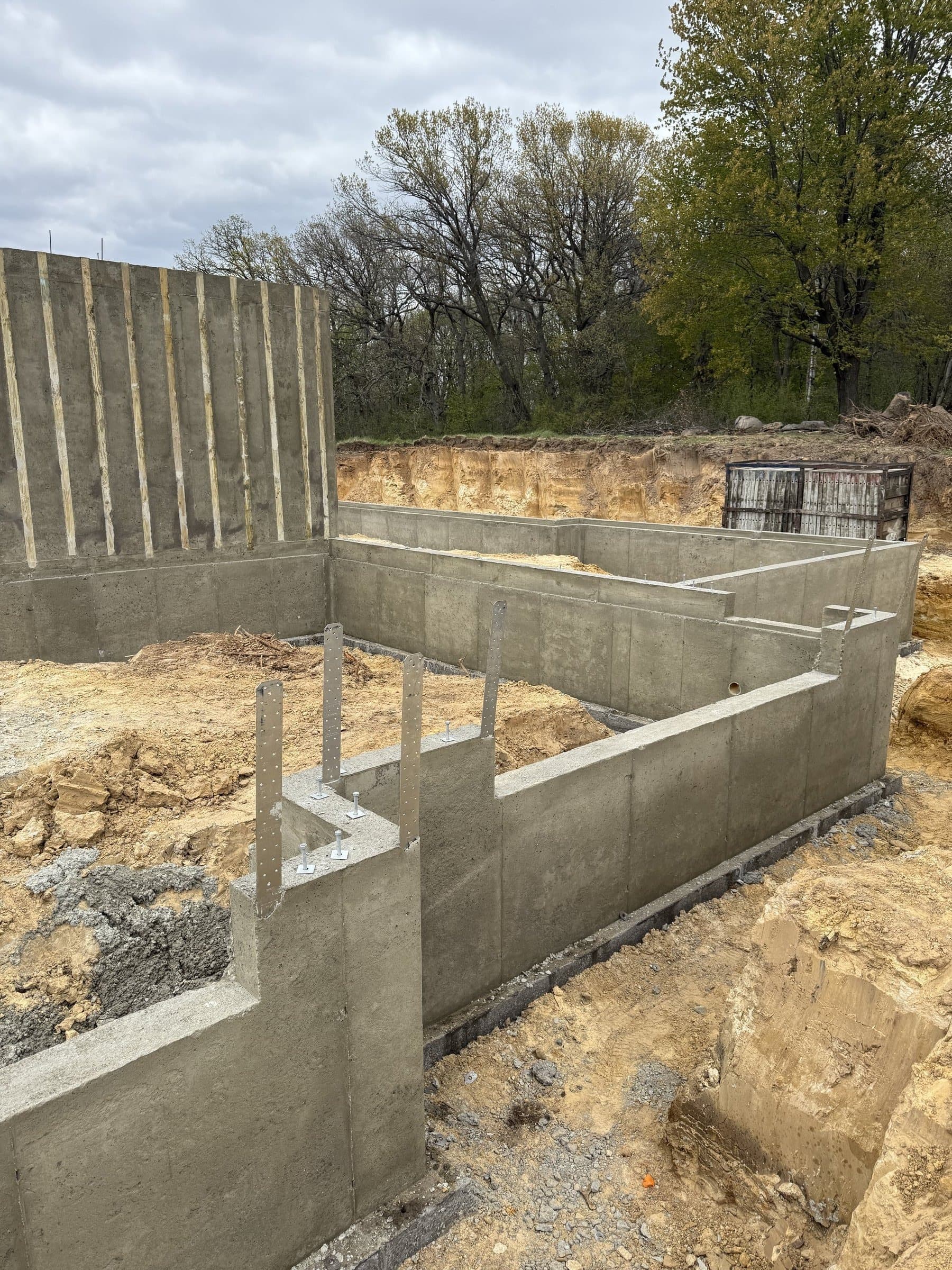
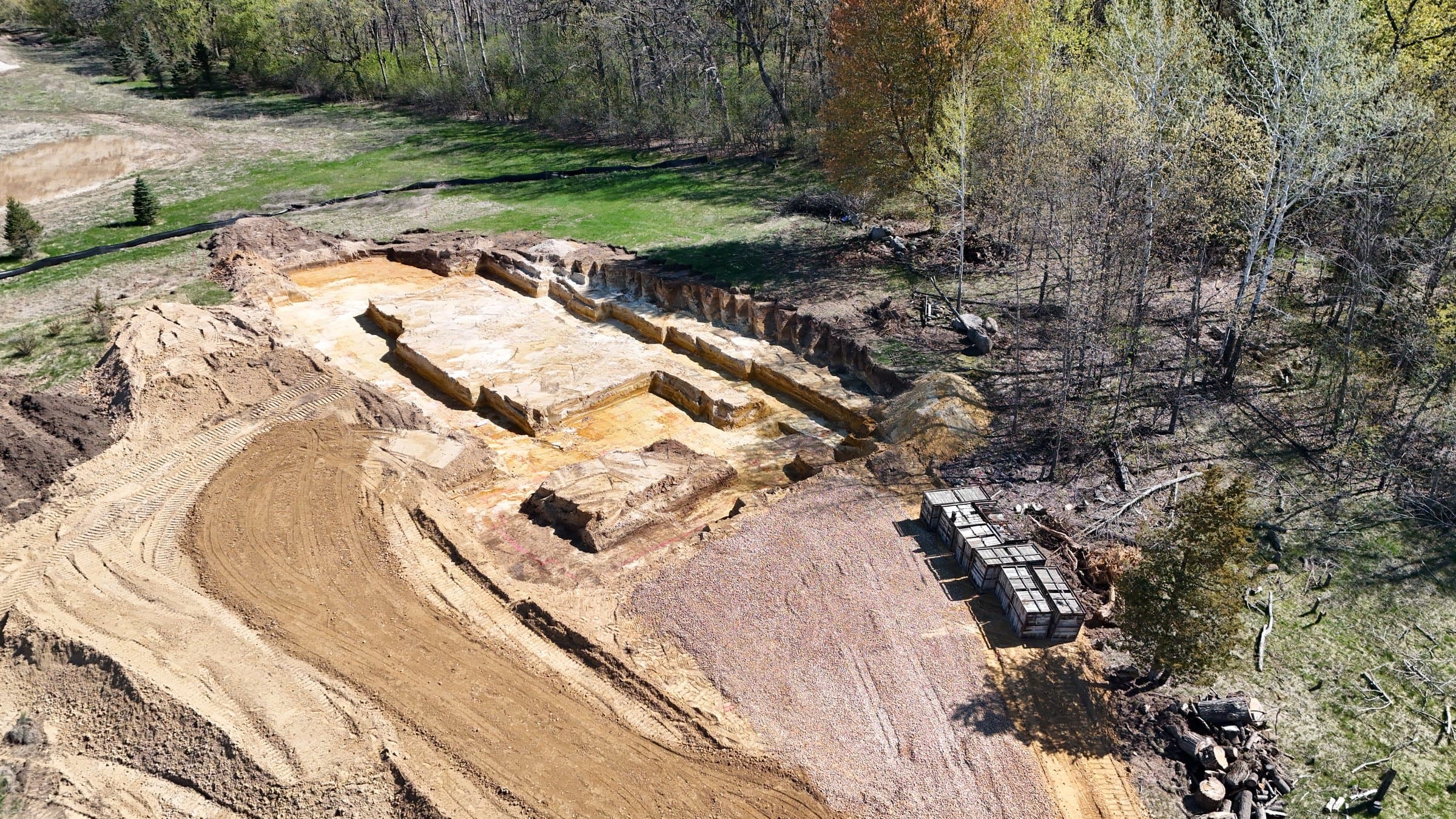
Five wooded acres in Afton, a single-level home, slab-on-grade with a safe room. Real proof there's an actual home being built.
The foundation is finished.
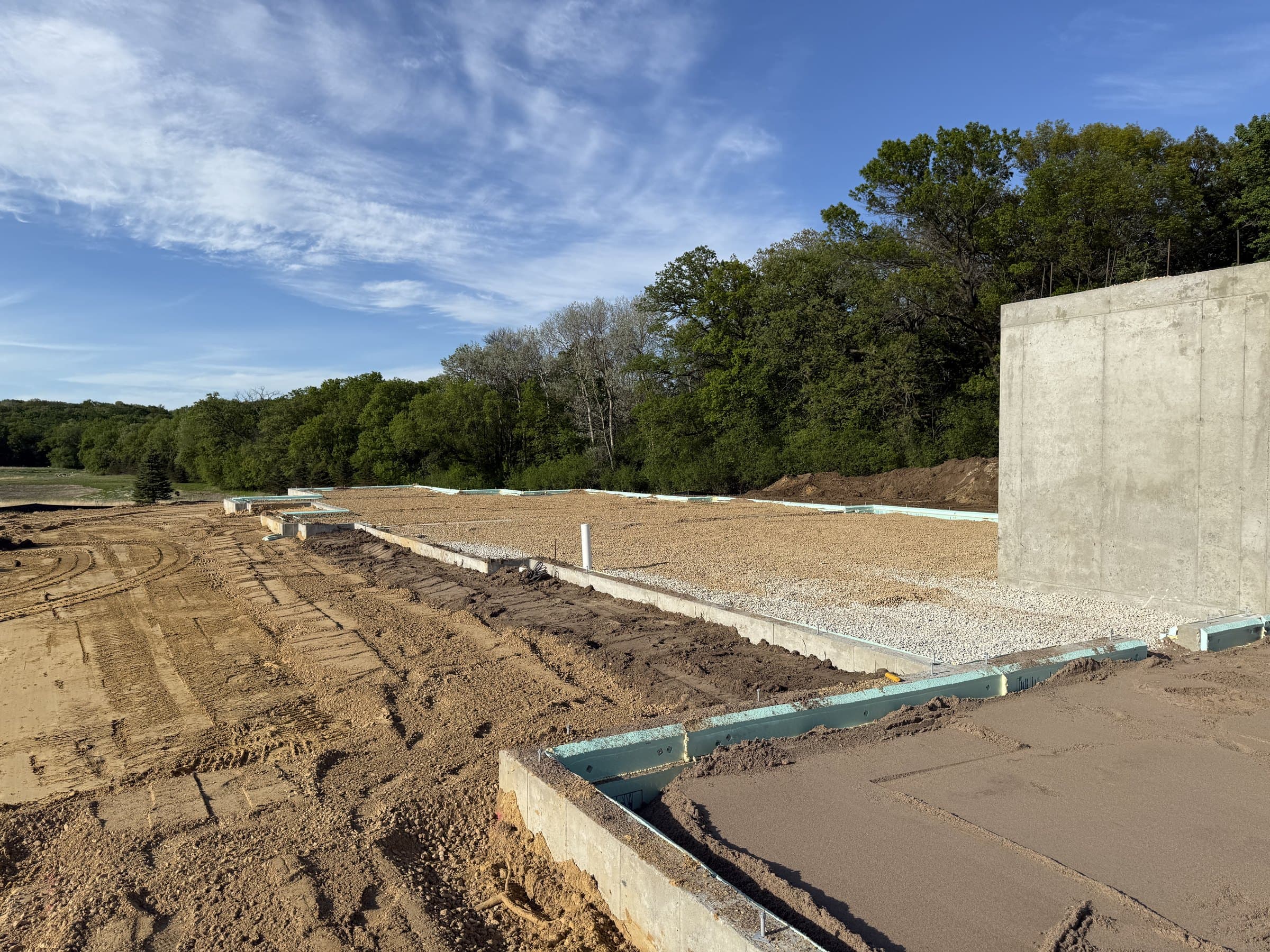
Week 6. The foundation is done, and the dirt has been pushed back up around it. Inside the walls the ground is filled in and flat. For a few days you could walk the whole thing, room to room, before it gets closed up. Woods close on every side. The floor goes in next.
Tell us about the move.
The first call is a conversation, not a quote. We map the timing before either side starts. Or call (651) 383-1710.