
You want the house up on a rise, looking out over its own land.
You've had it in mind for a long time. East Hugo has ten-acre parcels on rolling hills, and our part is making sure the land you find can take the house where you want it to sit.
Life here
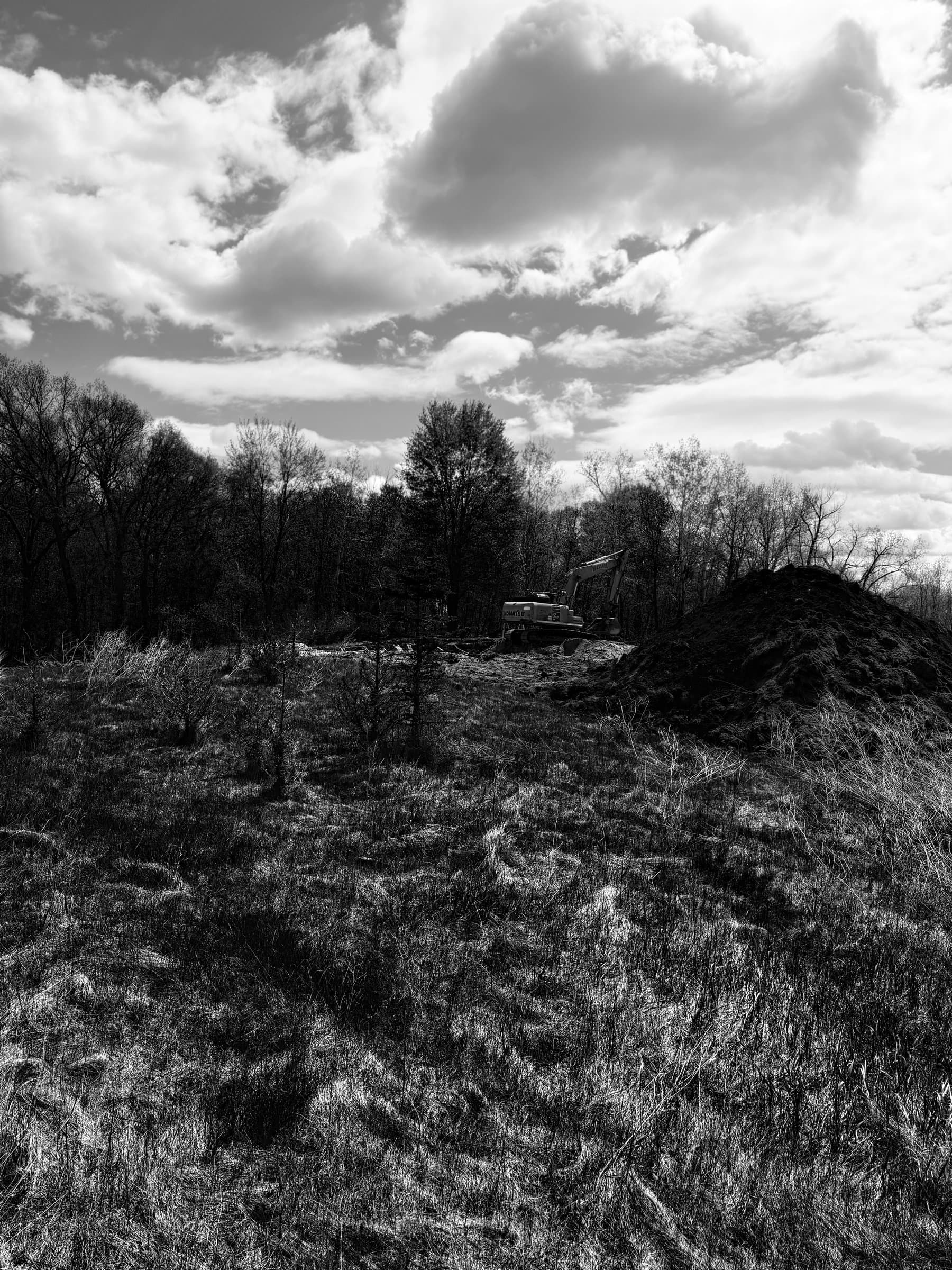
Out on the east side of Hugo, the sky is most of the view. The city has two sides. The west side grew along Highway 61 and the old rail line, and it has city sewer and water. The city's own plan says the eastern half has remained predominately rural, and about 72 percent of the city is zoned for one home per ten acres or less. The east side is where the hobby farms and the rolling glacial hills are.
Hugo is split among four school districts: White Bear Lake, Forest Lake, Stillwater and Mahtomedi. The line can change from one parcel to the next, and listing data sometimes gets it wrong, so we check the district for each address.
This area was Dakota homeland. Oneka Lake, and the township that once carried its name, come from the Dakota word onakan, which refers to harvesting wild rice by canoe. Today the Hardwood Creek Regional Trail runs paved along Highway 61 from Forest Lake into Hugo, and the Rice Creek Chain of Lakes Park Reserve is nearby.
What we check on a Hugo lot
Ten acres sounds like plenty, and it usually is, but wetlands and lake rules can shrink the part you can use. These checks come from Hugo's zoning code and comprehensive plan, Washington County's septic program and the Rice Creek Watershed District. Rules change, so we confirm each one with the city for your parcel.
Ten acres, and sometimes more
In Hugo's Agricultural and Rural Residential districts, the minimum lot is ten acres, at one home per ten acres. Future Urban Service land needs 20 acres, and Long-Term Agricultural land needs 40. A new lot also has to be at least 300 feet wide and 480 feet deep. Before you make an offer, we check the district and whether the parcel is a buildable lot of record.
Septic and well out east
Only the western part of Hugo is planned for city sewer and water. On the east side, the house uses a private well and a septic system permitted by Washington County. The county can take up to 60 days to review a complete application, and that application needs soil borings, the system design and the house plans. We start the soil work early so the septic doesn't hold up the build.
Wetlands and low ground
Hugo has about 944 acres of mapped protected wetland, and some seasonal wetland isn't on the map at all. The city administers the state Wetland Conservation Act itself, and filling or changing a wetland takes a conditional use permit and a replacement plan. When a listing mentions low land, we get the wetland edge marked before you agree on a price.
Lake lots
Oneka and Rice lakes are classified as Natural Environment lakes. On an unsewered lot there, the lot needs 80,000 square feet and 200 feet of width, and the house and the septic both sit 150 feet back from the water. On Bald Eagle Lake, an unsewered house sits 75 feet back. Any shoreland lot in Hugo is capped at 25 percent hard surface.
Which watershed district
Most of Hugo is in the Rice Creek Watershed District, which revised its rules effective January 2025, and its staff approve permits for single-family homes. A small eastern part of the city falls in the Carnelian-Marine-St. Croix or Browns Creek districts instead, and those have their own rules. We confirm the district before the drainage design starts.
Outbuildings and animals
On ten acres or more, Hugo allows three accessory buildings totaling 5,000 square feet. None of them can be bigger or taller than the house, and outside the agricultural districts they can't sit in front of it. If you plan to keep horses, a parcel of five acres or more gets two animal units for the first five acres and one more for each acre after that, so ten acres allows seven horses without a special permit. An indoor riding arena needs at least ten acres.
If you're still looking for land here
The large parcels in Hugo are mostly on the east side, where the zoning keeps them at ten acres or more. Lori runs Royal Home Team, and she and her team help people find acreage out there. She'll ask how you plan to use the land, and how much yard you actually want to keep up, before she sends you anything.
If you need to sell first
If you have a home to sell before you build, Royal Home Team can take care of the sale while we plan the house with you.
Questions about building in Hugo
Is there city sewer on the east side of Hugo?
No. The area planned for city sewer and water is on the western side of the city. East Hugo homes use a private well, drilled by a licensed well contractor under a Minnesota Department of Health permit, and a septic system permitted by Washington County.
Can I split 20 acres into smaller lots?
In the Agricultural and Rural Residential districts, density is one home per ten acres, so 20 acres can hold two homes at most, and each new lot needs 300 feet of width and 480 feet of depth. Future Urban Service land is held at one home per 20 acres.
How long does a Hugo building permit take?
The city asks you to allow up to ten working days once the application is complete. On a rural lot, the county's septic review can take up to 60 days, so the septic usually sets the pace. We send the septic application in first.
Does the driveway have to be paved?
Not in Hugo's rural districts. Each lot gets one driveway, and a shared driveway needs a conditional use permit and a recorded maintenance agreement. If the lot is on a county road, the county's driveway permit is part of the building permit packet.
Tell us about the Hugo acreage you have in mind.
Send the address or the listing, and Lori or Dustin will call you back to ask what you have in mind for the land.